





Marine Heat Exchangers
Marine Cooler: High-Efficiency Cooling Solutions in Maritime Systems
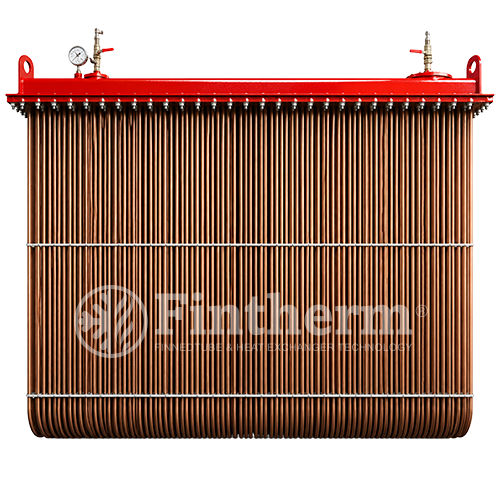
In the demanding conditions of the maritime sector, effective heat management is the key to maintaining the performance of main ship engines and generators. A **marine cooler** is specialized cooling equipment designed to remove the heat generated by the engine, gearbox, and other critical systems in marine vessels during operation. At Fintherm, we utilize the natural cooling potential of seawater with the highest efficiency in these systems, whether they are integrated into the ship’s hull or positioned in the engine room. Marine coolers operate within a specialized box integrated into the ship’s hull (sea chest) or in forced flow lines. The basic operating principle of the system is to take advantage of the low temperature of seawater to bring the heated coolant down to optimum operating values. This process is carried out through natural convection caused by the ship’s movement or forced flow provided by pumps, preventing the machinery from overheating and experiencing performance loss.Material Engineering: Cupro-Nickel Tubes and Corrosion Resistance
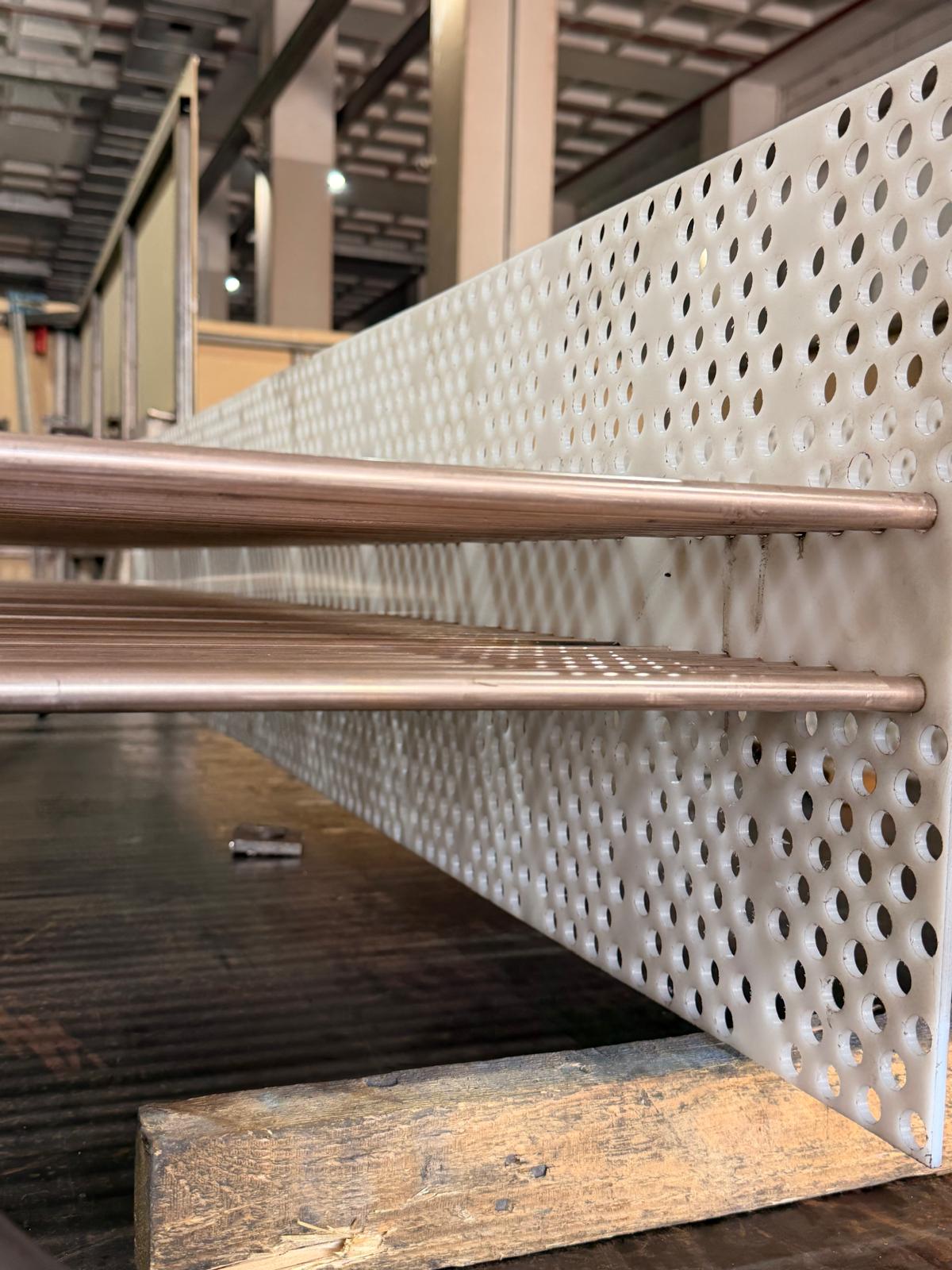
Seawater is an extremely aggressive environment for metals due to its high salt content and the microorganisms it contains. Therefore, material selection is of vital importance during the **marine cooler manufacturing** process. In Fintherm solutions, cupro-nickel (bafon) tubes are generally preferred for surfaces in contact with seawater.- High Durability: Cupro-nickel alloys demonstrate superior resistance to the corrosive effects of seawater, minimizing the risk of pitting and leakage.
- Thermal Conductivity: Thanks to its copper-based structure, it ensures the rapid transfer of heat between fluids.
- Corrosion Measures: The service life of the coolers is maximized through special coatings and material compatibility applied during the design phase.
Critical Parameters in Marine Cooler Design
A modern marine cooler should not only provide cooling but also contribute to the ship’s hydrodynamics and energy efficiency. Fintherm design criteria include:- Flow Optimization: The flow path of the seawater within the cooler is simulated to absorb the maximum heat with minimum resistance.
- Ease of Maintenance: Configurations that allow for easy cleaning and periodic maintenance are preferred against the risk of marine fouling (algae, shellfish, etc.).
- Energy Efficiency: Fuel savings are supported by low-pressure-drop designs that reduce the pump load in forced flow systems.
- Environmental Sustainability: Thermal impact on the marine ecosystem is minimized through eco-friendly materials and high-efficiency thermal transitions.
Application Areas
Fintherm marine coolers are reliable partners for all types of power management needs at sea:- Main engine jacket water cooling.
- Generator and auxiliary machinery cooling circuits.
- Gearbox and hydraulic system oil cooling.
- Central cooling systems in cargo and passenger ships.
Project Process
Product Photos



Frequently Asked Questions
01.
In which systems are ship towers used?
Main engine cooling circuits are commonly used in auxiliary machinery, generators, hydraulic units, oil-cooling systems, and various heat control circuits.
02.
Does operating the coolers with seawater cause corrosion?
The coolers have high corrosion resistance because they are manufactured with special alloys resistant to saltwater, protective coatings, and stainless materials. Regular maintenance further extends their service life.
03.
Can it be retrofitted to existing ship systems?
Yes. Thanks to its compact design and modular structure, it can be applied to both new ship projects and easily integrated into existing systems as a retrofit.
04.
What are ship towers and why are they of critical importance in maritime operations?
Gemi kuleri, gemi makinelerinin (ana makine, jeneratör vb.) çalışma sırasında ürettiği ısıyı doğrudan deniz suyuna aktaran bir ısı değiştiricidir. Geminin "akciğerleri" görevini görür; eğer kuler verimli çalışmazsa makine dairesinde hararet oluşur, bu da ana makinenin stop etmesine ve A ship's cooler is a heat exchanger that transfers the heat generated by the ship's machinery (main engine, generator, etc.) during operation directly to the seawater. It acts as the ship's "lungs"; if the cooler does not operate efficiently, overheating will occur in the engine room, creating serious risks that could lead to the main engine stalling and the ship veering off course (NUC - Not Under Command).
geminin rotasından çıkmasına (NUC - Not Under Command) yol açabilecek ciddi riskler doğurur.
geminin rotasından çıkmasına (NUC - Not Under Command) yol açabilecek ciddi riskler doğurur.
05.
Why are Bafon (copper-nickel) pipes a standard material in ship towers?
Seawater very quickly corrodes carbon steel and standard stainless steel through "pitting" (point corrosion). Bafon pipes (especially CuNi 90/10) have a natural immunity to seawater. The thin, sticky protective film layer that forms on the metal surface stops corrosion. Bafon also has a property that makes it difficult for marine organisms (barrels, mussels) to adhere to the metal surface.
06.
What is the difference between a "Box Cooler" and a plate heat exchanger?
Box coolers are installed inside a sea chest within the ship's hull, and seawater flows through the pipes via natural currents generated by the ship's movement, eliminating the need for pumps. Plate heat exchangers, on the other hand, are mounted inside the ship, requiring pumps to pump seawater into the exchanger. Box coolers are a simpler and more reliable system as they eliminate pump costs and piping complexity.
07.
How can the effects of marine organisms (biofouling) on watercourses be prevented?
In coolers exposed to seawater, algae, mussels, and other organisms can adhere to the tube surfaces, completely halting heat transfer. To prevent this, Fintherm coolers utilize ICAF (Impressed Current Anti-Fouling) systems. These systems release low amounts of copper ions into the seawater, creating a protective environment that prevents organisms from adhering to the cooler surface.