





Economizers
Shell and Tube Heat Exchanger: The Powerful Center of Industrial Heat Transfer
One of the most critical pieces of equipment in industrial facilities, the **shell and tube heat exchanger**, is a system that allows two fluids at different temperatures to transfer heat across a wide surface area without mixing. The shell and tube heat exchangers we design as Fintherm are known for their superior performance under high pressure (350 bar shell, 1400 bar tube) and extreme temperature (200°C – 600°C) conditions. These exchangers offer thermal shock-resistant and long-lasting solutions in a wide range of applications, from oil refineries to food factories. The basic operating principle of the system is that one fluid flows through the inside of the tubes (**tube side**), while the other fluid flows through the shell surrounding these tubes (**shell side**). To maximize heat transfer, **corrugated** or **turbulator** tube technologies are utilized inside the tubes.Structure and Basic Components of Shell and Tube Heat Exchangers
Fintherm shell and tube heat exchangers are manufactured in accordance with international standards (TEMA, ASME, EN 13445) consisting of three main parts:- Front Header (Stationary Head): The section that regulates the entry of the fluid into the tube side.
- Shell: The cylindrical structure surrounding the tube bundle where the shell-side fluid circulates. Expansion joints (bellows) used to absorb thermal expansion are located in this part.
- Rear Head: The section where the fluid completes the tube circuit or makes a return.
- Tube Bundle and Tube Sheets: Perforated plates (tube sheets) where the tubes are fixed, preventing the fluids from mixing. Tube pitches are generally designed in a triangular or square arrangement, typically 1.25 times the tube diameter.
Design Types: U-Tube and Straight-Tube Exchangers
Fintherm offers two basic designs based on the physical and thermodynamic requirements of the process:- U-Tube Heat Exchanger: In this model, where the tubes are bent into a “U” shape, the structure naturally compensates for expansions caused by high temperature differences. It is preferred in areas requiring high capacity and systems where the pressure resistance of a circular cross-section is utilized.
- Straight-Tube Heat Exchanger: A model where the tubes are fixed on a straight line with tube sheet connections. Its biggest advantage is that the inside of the tubes can be easily cleaned mechanically. It offers high performance up to 350°C in food and chemical sectors where hygiene is critical.
Material Selection and Manufacturing Technology
During the **shell and tube heat exchanger manufacturing** process, material selection is determined by our expert team according to the corrosive effect and temperature of the fluid. For tube materials; copper, stainless steel, carbon steel (drawn or welded), cupro-nickel, brass, or titanium can be used. On the shell side, a wide range is available from carbon steel to duplex steels. The **baffling** design is of critical importance in manufacturing. Baffles force the shell-side fluid to zigzag around the tube bundle, maximizing turbulence and therefore the heat transfer coefficient.Usage Areas and Sectoral Applications
Thanks to their flexible design and durability, these exchangers find a place in almost every industry:- Oil and Refinery: Crude oil heating, gas liquefaction, and heavy oil cooling.
- Power Generation: As condensers and steam generators in thermal and nuclear power plants.
- Textiles and Dyeing: Precise temperature control in yarn and fabric dyeing machines.
- Maritime: Cooling of ship engines using seawater.
- HVAC and Food: Central heating systems, pasteurization, and chiller cooling groups.
Project Process
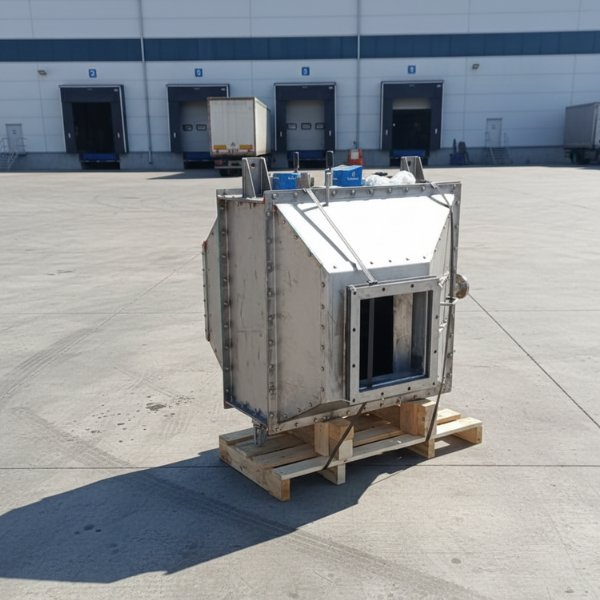
Product Photos


Frequently Asked Questions
01.
What is an economizer and why should it be added to a boiler?
An economizer is a heat exchanger that preheats the feedwater or process water entering the boiler by utilizing the heat from the hot flue gases discharged from the boiler into the atmosphere. The main reason for adding it to the boiler is to recover this heat, which would normally be wasted, thereby reducing fuel consumption by 3% to 8% and increasing the overall efficiency of the plant.
02.
How much fuel can be saved by using an economizer?
As a general engineering principle, every 20-22°C decrease in flue gas temperature increases boiler efficiency by approximately 1%. With modern Fintherm economizers, flue gas temperatures can be reduced from 200°C to 60°C-70°C, resulting in significant annual fuel savings and lower carbon emissions.
03.
What is "Condensate Corrosion" (Dew Point Corrosion) and how does it affect the economizer?
Water vapor in flue gas liquefies when its temperature drops below a certain point (dew point). If the fuel contains sulfur, this condensation leads to the formation of sulfuric acid, which rapidly corrodes carbon steel pipes. To manage this risk, Fintherm uses stainless steel materials or designs control systems that prevent the feedwater inlet temperature from falling below this point.
04.
When should finned tubes be preferred in economizers?
In systems using clean fuels like natural gas, finned tubes are preferred to increase the heat transfer surface and keep the design compact. However, in systems using fuels that produce soot, such as coal or heavy oil (fuel oil), straight tubes or special fin structures with very wide pitch (gaps) are used to prevent clogging of the fins.
05.
What is the effect of the economizer on the boiler's lifespan?
The economizer not only saves fuel but also prevents the boiler from experiencing thermal stress by increasing the temperature of the cold water entering the boiler. Reducing the temperature difference between the water entering the boiler and the water inside the boiler minimizes "thermal shock" in the boiler plates and tubes, thus extending the mechanical life of the boiler.