



Двухрядная ребристая ванна
Double Plate Fin Tube Heat Exchanger: High-Performance Heat Transfer Solutions
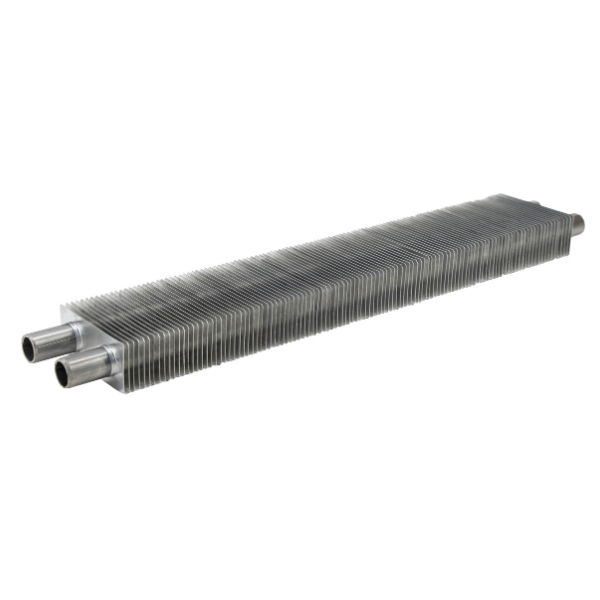
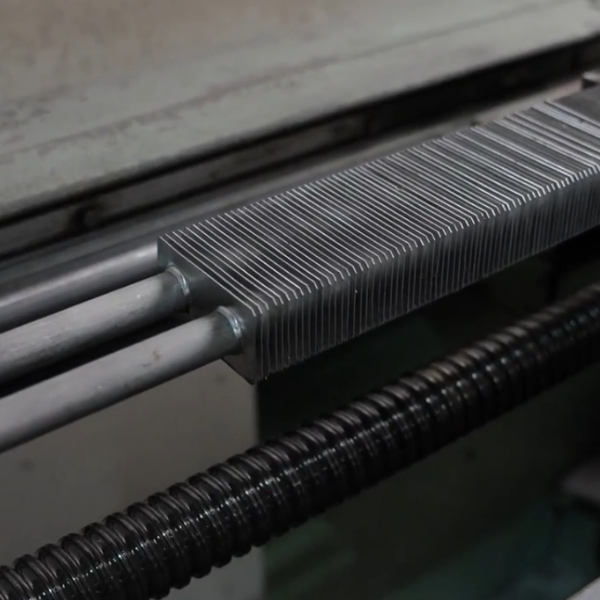
The Double Plate Fin Tube Heat Exchanger, one of the most fundamental elements determining efficiency in industrial heating and cooling systems, is an optimized finned tube technology with excellent thermodynamic properties. Thanks to its rectangular fin structure, this system maximizes surface area and is developed to provide the best heat transfer in limited spaces with its compact design.
The plate fin heat exchangers produced by Fintherm ensure 100% contact between the tube and the fin through the following processes:
- Galvanizing: Hot-dip process for maximum surface protection.
- Brazing: Ensuring high thermal conductivity.
- Internal Expansion: Mechanical bonding to eliminate air gaps.
This integrated structure shows superior resistance to thermal and mechanical stresses, while the hot-dip galvanizing applied to the outer surface offers complete protection against corrosion.
Manufacturing and Technical Specifications
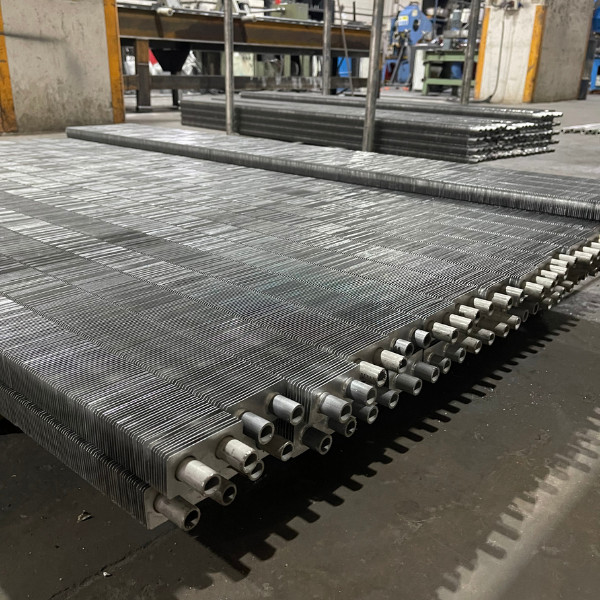
Plate fin heat exchanger manufacturing is a multi-stage process requiring expertise. After the standard tubes are formed, rectangular plates (fins) pressed with special dies are precisely arranged on the tube using automated machinery. The most critical point in the manufacturing stage is ensuring the fins are aligned on the tube surface without any gaps.
- Material Diversity: Carbon steel, stainless steel, copper, cupronickel (bafon), or brass alloy tubes can be used depending on the fluid type.
- Production Methods: Sealing and high thermal conductivity are guaranteed through internal expansion, dip brazing, or interference fit methods.
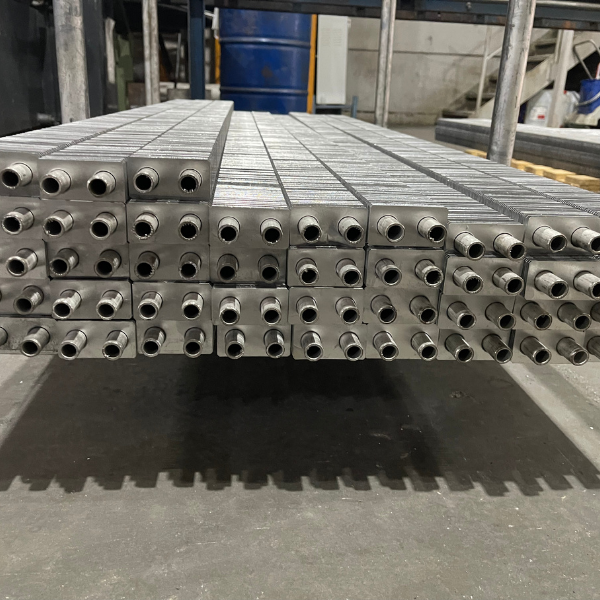
- Flexible Design: The number of tubes can be adjusted according to customer needs; production is available in round or oval tube forms.
Application Areas and Fluid Compatibility
Double plate fin heat exchangers are designed to work compatibly with a wide range of fluids. They can successfully transfer many different substances, from chemical liquids to seawater, and from thermal oil to steam.
They show high performance particularly in the following areas:
- Textile Sector: Drying machines and air heaters.
- HVAC: Air handling unit (AHU) air heaters and coolers.
- Energy and Machinery: Oil coolers, water coolers, and turbocharger systems.
- Marine: Ship air towers and systems requiring corrosion resistance with seawater fluids.
Heat Exchanger Types According to Material Selection
The type of metal used determines the lifespan and performance of the system:
- Carbon Steel & Hot-Dip Galvanized: Ideal for steam and thermal oil systems.
- Stainless Steel: Preferred in food facilities for hygiene and in environments with chemical corrosion risks.
- Copper & Copper Alloys: Yield excellent results in low-pressure applications requiring high heat conduction (brass, cupronickel).
Project Process
Product Photos
Frequently Asked Questions
01.
What is a Double Row Finned Tube and What Are Its Advantages?
02.
In which industrial sectors are double row finned tubes used?
03.
Double Row Finned Tube Prices and Lifespan Factors